Happi Coat Sushi Class Tokyo — Nigiri Near Tokyo Tower or Asakusa with SUSHI GARYU

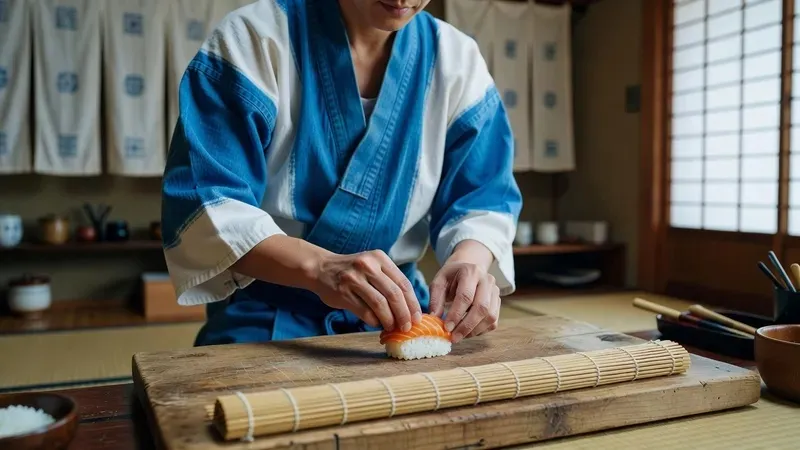
The happi coat sushi class Tokyo is SUSHI GARYU's signature experience: you don a traditional blue-and-white tube-sleeved Japanese chef's coat before touching the rice, shape nigiri with fresh tuna and salmon under a skilled chef's guidance, and leave with the photo to prove you actually looked the part. With 4.9★ across 1,528 reviews, it's the second most-reviewed class on this page, available at two Tokyo locations — near Tokyo Tower in Minato, or in Asakusa — so you can pick based on where you're spending the day. Vegetarian, vegan, and gluten-free menus are available with advance notice, and the class runs in a relaxed 90-minute format that fits easily into a half-day itinerary.
About This Activity
Up to 24 hours in advance — full refund
Secure your spot with no payment today
1.5 hours
Two options: near Tokyo Tower (Minato) or Asakusa — confirmed at booking
4.9★ from 1,528 verified reviews
Happi coat to wear during class, cooking class with skilled chef, all ingredients
Vegetarian, vegan, gluten-free — notify at booking; not available on the day
Check Live Availability
Choose your preferred location — Tokyo Tower or Asakusa — at checkout. Check available dates below.
What Makes the Happi Coat Class Stand Out
The happi coat is the detail that makes this class memorable. A happi (法被) is a traditional Japanese straight-sleeved coat originally worn at festivals and by artisans and shop workers — the visual equivalent of putting on a chef's whites, but Japanese. Wearing one while making sushi positions you as an active participant in the craft, not a tourist watching a demonstration. It also makes for a far better photo than an apron.
The class itself covers nigiri only — specifically tuna (maguro) and salmon (sake), the two most universal sushi fish — with a clear technical focus on rice temperature, shaping pressure, and fish-to-rice ratio. The chef gives individual feedback on your technique, and the small-group format (groups are divided so roughly five people share a host) means you actually get attention.
The two-location option is genuinely useful. Tokyo Tower and Asakusa are on opposite ends of Tokyo's tourist circuit — choosing the location that matches your afternoon means no wasted commute. Among the sushi making class tokyo options, this is the best combination of cultural depth and practical flexibility.
What You'll Make & Experience
The class is narrower in scope than the Asakusa or Shinjuku options — it focuses on nigiri specifically rather than covering multiple sushi styles. That focus means you go deeper on technique.
- Happi coat: traditional Japanese artisan coat provided at the start — worn for the full class and the photo at the end
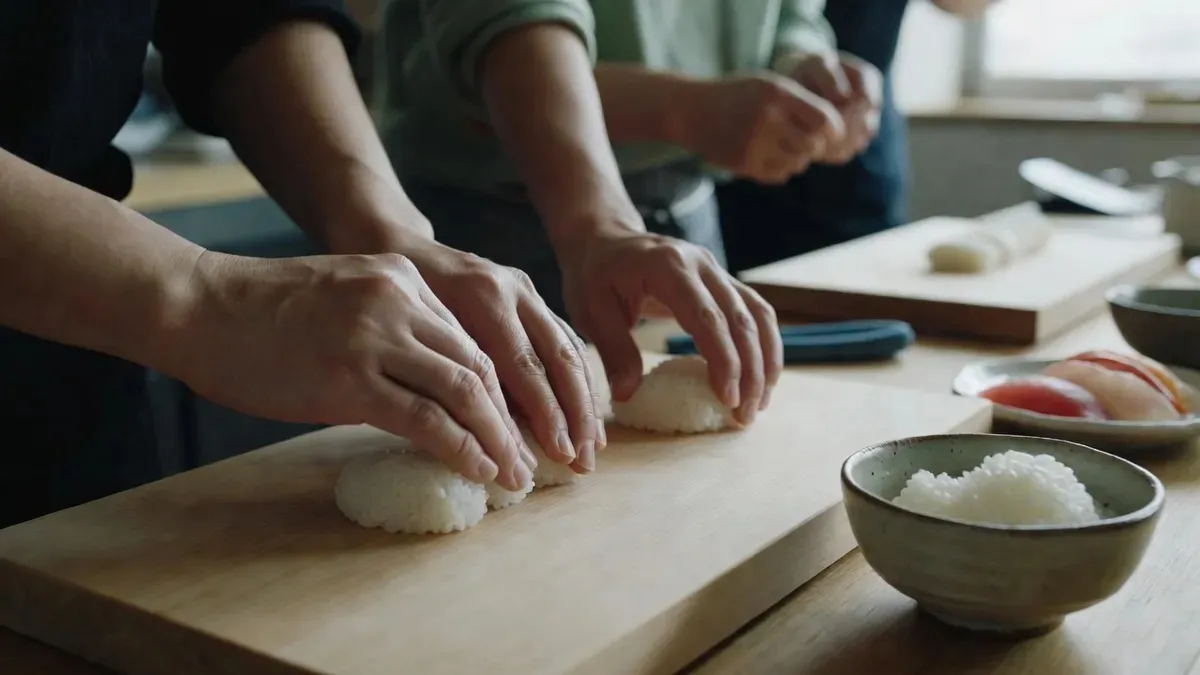
- Rice preparation: learn how sushi rice is seasoned and why temperature matters for nigiri shaping
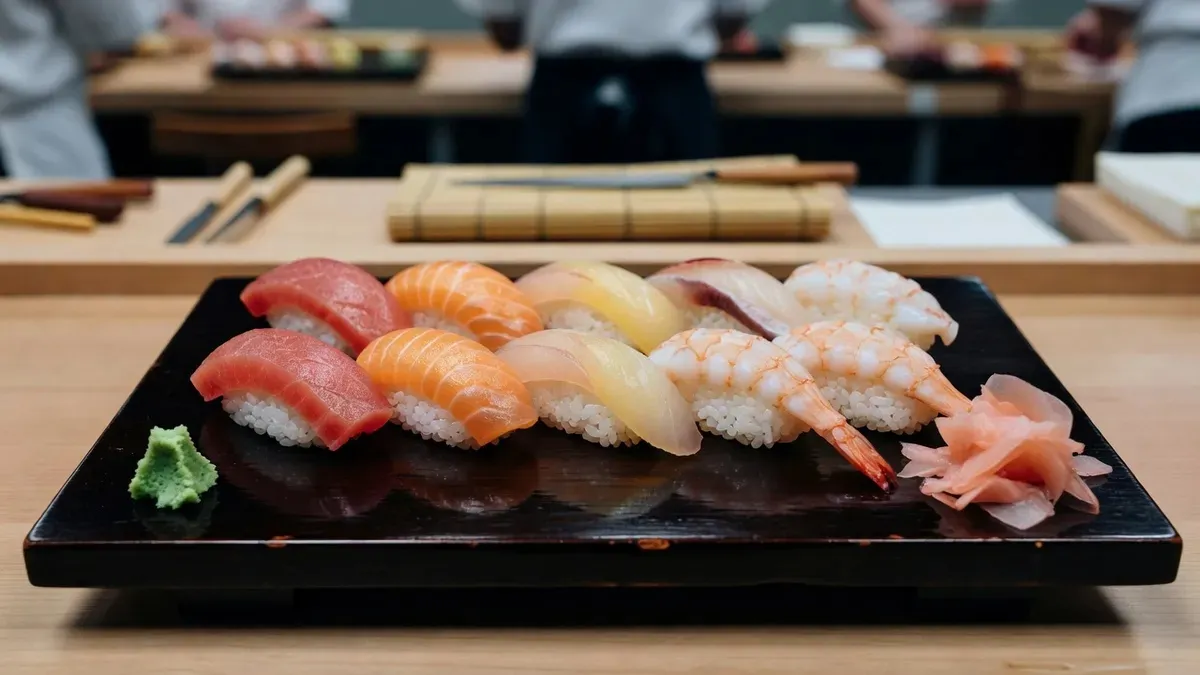
- Tuna nigiri: maguro slice placed on a hand-pressed rice oval — the classic nigiri combination
- Salmon nigiri: sake slice with the same technique — a chance to refine your shaping on a second piece
- Chef feedback: the instructor corrects your grip, pressure, and presentation individually
- Sit-down tasting: eat the sushi you made at the end of the class
- Photo with the happi coat: most participants photograph their completed sushi plate in full chef attire
What's Included
- Traditional happi coat — worn during the class and the final photo
- Cooking class with a skilled sushi chef
- All ingredients: sushi rice, fresh tuna, fresh salmon (or dietary alternatives on request)
- Instructor guidance throughout the 90-minute session
Not included
- Drinks — a separate drink menu is available for additional charge
- Hotel pickup or drop-off
How the Class Works
- Arrival at your chosen venue (Tokyo Tower or Asakusa) — specific meeting instructions confirmed at booking
- Happi coat fitting: put on the traditional coat and take the group intro photo
- Sushi lecture: brief introduction to nigiri history, fish selection, and rice preparation
- Rice prep: understand how sushi rice is seasoned and handled for nigiri
- Tuna nigiri: shape your first piece with chef guidance and individual correction
- Salmon nigiri: apply what you learned to a second piece
- Sit-down tasting: eat your sushi at the table
- Final photo: group or individual photo in happi coat with completed dish
Important Things to Know Before You Go
A few practical points before booking:
- Vegetarian, vegan, and gluten-free menus are available — but MUST be requested in advance at booking; requests on the day cannot be accommodated
- Children aged 4 and over participate as paying guests; children 3 and under may share an adult's dish for free
- The venue may seat you alongside other customers depending on how busy it is on the day
- Both locations (Tokyo Tower and Asakusa) run the same class format — choose based on which fits your day's itinerary
- Drinks are available to purchase on-site at additional cost; a drink menu is offered separately
Getting There
Who This Class Is For
The happi coat class is ideal for travelers who want a cultural element alongside the cooking — not just a skill class, but a Japanese experience they can photograph and remember.
- Couples and pairs — the intimate group format and the photo moment work especially well for two
- Travelers near Tokyo Tower or Asakusa who want a class that fits their day without a commute
- First-timers who want to focus on nigiri specifically rather than covering multiple sushi styles
- Vegetarians and vegans — one of the few Tokyo classes that accommodates meat-free diets with genuine effort
- Families with children aged 4+ — the child-inclusive policy and the happi coat make it particularly engaging
Not suitable for
- Children under 3 (children 3 and under may share an adult's dish for free, not participate independently)
- Guests with dietary needs who cannot notify the operator in advance
Frequently Asked Questions
What is a happi coat?
A happi (法被) is a traditional Japanese straight-sleeved cotton coat originally worn at festivals and by shop workers and artisans. In the context of a cooking class, wearing one signals your role as a craftsperson rather than a spectator. The SUSHI GARYU class provides the coat at the start of the session — it's worn for the full 90 minutes and featured in the photo at the end.
Which location should I choose — Tokyo Tower or Asakusa?
Both run the identical class. Choose the one that matches where you'll be spending the rest of your day. Tokyo Tower (Minato) is central and easy to reach from Shinjuku, Shibuya, or Roppongi. Asakusa suits guests spending the day in the Shitamachi area or visiting Senso-ji. The class format, quality, and price are identical at both venues.
Do I get to keep the happi coat?
No — the happi coat is provided for the duration of the class and returned at the end. The photo of you in the coat is yours to keep. If you'd like to buy a happi coat as a souvenir, Asakusa's Nakamise shopping arcade has several shops that sell them.
What types of sushi does the class cover?
The class focuses exclusively on nigiri — specifically tuna (maguro) and salmon (sake), the two most classic nigiri toppings. The depth on technique (rice temperature, shaping pressure, fish-to-rice ratio) is greater than in classes that spread across multiple sushi styles. If you want maki rolls or temaki in addition to nigiri, the Asakusa or Shinjuku class covers more styles.
Can I bring children?
Yes. Children aged 4 and over must book as paying participants if they want to make sushi independently. Children aged 3 and under may share an adult's dish for free and observe without their own equipment. The happi coat is available in sizes that work for older children.
Is vegan or vegetarian sushi available?
Yes — vegetarian, vegan, and gluten-free options are available. You must notify the operator at booking; same-day requests cannot be accommodated. The kitchen prepares your dietary menu in advance. This is one of the few happi coat sushi class Tokyo options that takes dietary needs seriously.
What happens if the venue is busy on my day?
Depending on venue capacity, you may be seated alongside other customers. The class still runs with your instructor's full attention — you're not mixed into another group's class, just sharing the same room. SUSHI GARYU divides groups so roughly five people share each instructor.
How early should I book?
1–2 weeks in advance for most of the year. Cherry blossom season (late March–mid April) and Golden Week (April 29–May 5) require 3–4 weeks notice at minimum. The Asakusa location fills faster than Tokyo Tower during peak Asakusa tourist periods.
What Travelers Say
This was one of the best experiences we had in Tokyo. Learning how to prepare sushi and rolls under Tomo's guidance was an absolute pleasure — professional, welcoming, and full of passion. It's not just a typical tourist workshop, but a genuine piece of Japanese culture that will stay with you for a lifetime.
This was an absolutely amazing experience. Taka was so helpful, enthusiastic, and kind. He taught us how to make amazing sushi and also got to know us as people. He was truly amazing and made this experience unforgettable. 100% would go again when in Tokyo again!
The sushi course was a unique and wonderful experience. We learned a lot about Japanese culture, and during the class everything was explained in a very professional and clear way. Afterwards, we tasted the sushi we made ourselves, and it tasted absolutely excellent. This will remain one of the highlights of our trip to Japan.