Tsukiji Sushi Making Class — Fish Market Tour & Pro Chef Experience

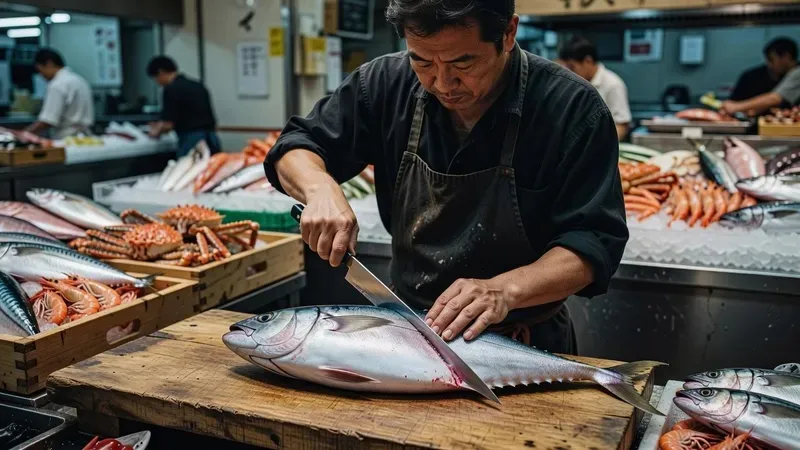
The Tsukiji sushi making class run by Japan Wonder Travel is built around one thing most cooking classes can't offer: a professional sushi master demonstrating live fish preparation before you make anything. The class is set inside the Tsukiji outer market — the historic Tokyo fish trading district where Japan's relationship with ultra-fresh seafood was shaped over decades — and the ingredients you cook with come directly from the market. You'll watch a live fish-cutting show, learn how fresh wasabi is grated and what shari-kiri means, then make four nigiri and one maki under the chef's guidance. With 4.9★ across 696 reviews, it's the most technically immersive sushi class on this list.
About This Activity
Up to 24 hours in advance — full refund
Secure your spot with no payment today
1.5 to 4 hours depending on option booked
Tsukiji Outer Fish Market, Chuo, Tokyo (meeting point varies by option — confirmed at booking)
4.9★ from 696 verified reviews
English-speaking host, professional sushi master, fresh ingredients, 4 nigiri + 1 maki, additional chef's sushi, dashi soup, hat
English (interpreter throughout)
Check Live Availability
Morning sessions are the best time to visit Tsukiji — the market is most active and the fish is freshest. Check dates below.
Why the Tsukiji Class Is Different from Every Other Sushi Class in Tokyo
Most sushi classes in Tokyo start with pre-sliced fish laid out in neat rows. The Tsukiji class starts with a whole fish. Your professional sushi master walks you through the fish disassembly — showing you how the different cuts are made, explaining which parts are used for nigiri versus sashimi, and demonstrating the traditional yanagiba knife technique. By the time you pick up the rice, you understand why the fish matters.
The second differentiator is the wasabi. Fresh wasabi root (Wasabia japonica) is grated tableside using a traditional sharkskin grater — you see and smell the difference between real wasabi and the green horseradish paste that appears in most Tokyo supermarkets. The shari-kiri demonstration — the rhythmic hand-motion used to cool and season sushi rice — completes the technical picture.
The classroom itself is a classic Japanese-style room in a traditional building inside the Tsukiji outer market. No tourist polish, no modern kitchen fitout — just the real market environment that Tokyo sushi chefs have used for a century. Among all the tokyo sushi making class options, this is the one for people who want to understand sushi, not just assemble it.
What You'll See & Make
The class divides into three distinct phases: the fish show, the technique session, and the tasting. Each phase builds directly on the previous one — by the time you make your own sushi, you've already seen a master do it.
- Live fish-cutting show: whole fish broken down by the sushi master using a traditional yanagiba knife — you watch the exact preparation steps used by professional sushi chefs
- Fresh wasabi grating: tableside demonstration using real Wasabia japonica root on a sharkskin grater — and the difference from prepared wasabi paste
- Shari-kiri technique: the rhythmic hand-motion used to cool and season sushi rice while preserving grain texture
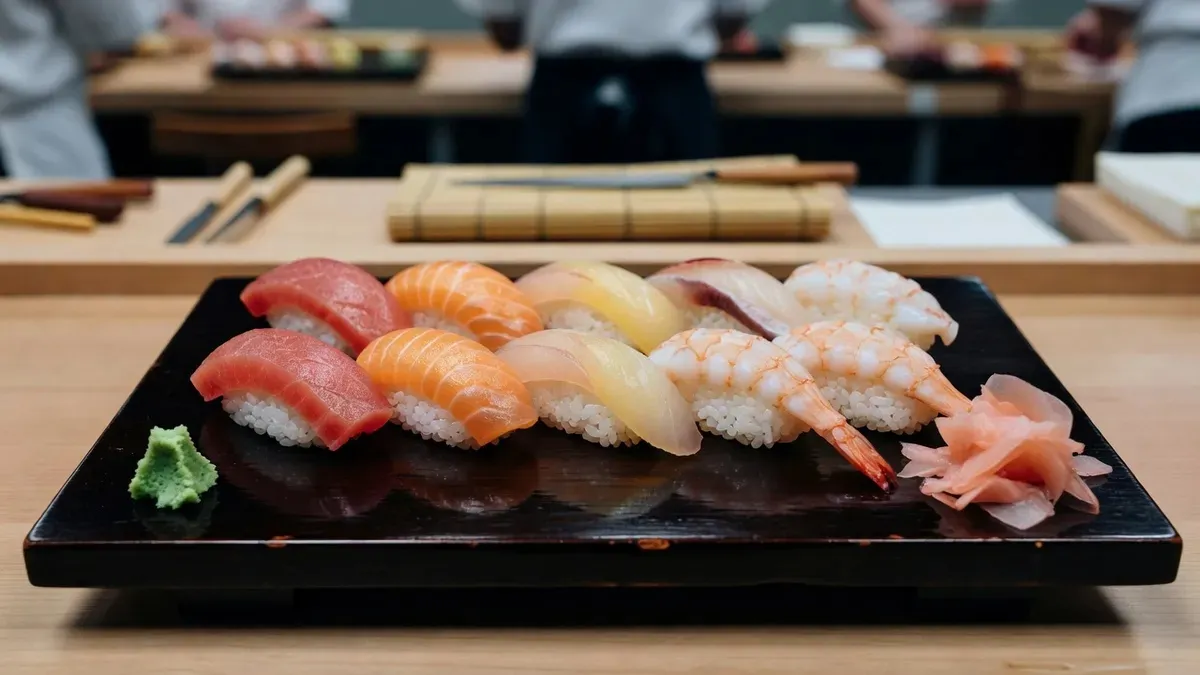
- 4 nigiri pieces: hand-pressed with premium Tsukiji-sourced fish; the master guides your shaping technique
- 1 maki roll: seaweed-wrapped roll assembled with market-fresh fillings
- Chef's nigiri: the master also prepares a piece for you to compare — you taste the difference between beginner and professional shaping
- Traditional dashi soup: served alongside as a classic Japanese pairing
What's Included
- English-speaking host for the full session
- Professional sushi master (separate from the guide — the master speaks through the host)
- Live fish-cutting demonstration with traditional Japanese knives
- All fresh ingredients: rice, nori, premium Tsukiji fish (varies by season)
- 4 nigiri + 1 maki of your own making
- Additional piece of nigiri prepared by the master chef
- Traditional dashi soup
- Hat provided for the session
Not included
- Extra food and drinks beyond the class meal
- Hotel pickup or drop-off
- Guidance through the market (available as a separate add-on option)
How the Class Works
- Arrival: meet your English-speaking host at the agreed meeting point inside Tsukiji outer market
- Fish show: the professional sushi master demonstrates whole-fish breaking down, knife technique, and ingredient selection
- Wasabi & rice: watch fresh wasabi grated, then observe the shari-kiri (rice cooling and seasoning) process
- Your turn: with the master's guidance, hand-press four nigiri pieces and roll one maki
- Tasting: eat your own sushi alongside a piece prepared by the master — the comparison is instructive
- Dashi soup: served as the final element of the traditional Japanese meal
Important Things to Know Before You Go
This class has the strictest access requirements of any on this list. Read these carefully before booking:
- No vegan, vegetarian, halal, kosher, or gluten-free alternatives — this class uses fresh fish throughout and cannot substitute
- The studio is on the 3rd floor of a traditional building with stairs only — not suitable for wheelchair users or guests with mobility impairments
- Children under 4 are not accepted
- Guests arriving more than 15 minutes after the scheduled start time will be turned away — this is treated as a no-show with no refund
- Allergy information must be provided at booking; while full dietary menus cannot be changed, the host can advise on individual allergen queries
- The tour may run longer than the scheduled end time — if you have a tight connection or appointment after, notify the host in advance
Getting There — Tsukiji Outer Market
Who This Class Is For
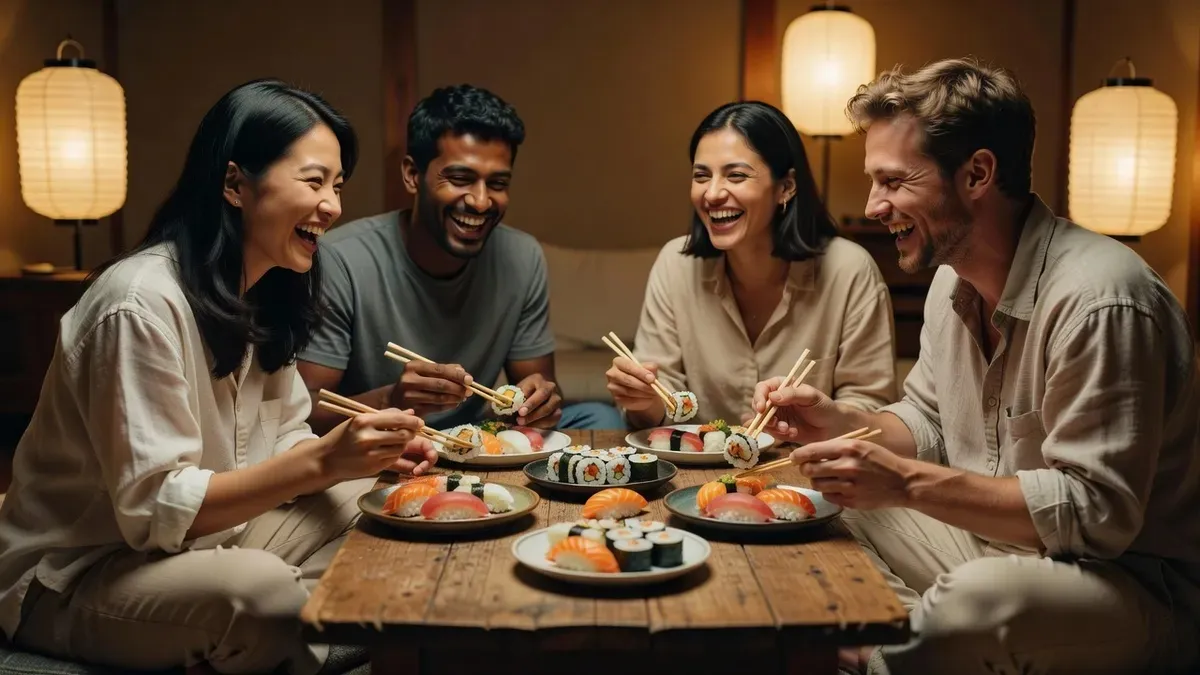
The Tsukiji class is aimed at food-curious travelers who want to understand the craft behind sushi, not just roll something and eat it. It's more technical than most options and rewards people who pay attention.
- Food enthusiasts who want to understand fish preparation, knife technique, and why sushi-grade fish is different
- Travelers staying in or around Ginza, Nihonbashi, or central Tokyo — Tsukiji is centrally located
- Guests who want to experience the authentic Tsukiji market atmosphere as part of the class
- Couples or small groups who enjoy hands-on, technical experiences
Not suitable for
- Vegans, vegetarians, halal-observing or gluten-free travelers — no dietary alternatives available
- Wheelchair users or guests with mobility impairments (3rd floor, stairs only)
- Children under 4 years old
- Guests who are inflexible on timing — late arrivals (15+ min) are turned away
Frequently Asked Questions
What is the Tsukiji fish market and why is the class held there?
Tsukiji was Tokyo's central wholesale fish market for over 80 years before the main auction moved to Toyosu in 2018. The outer market — where the class is held — remains active, with dozens of specialist fishmongers, knife shops, and tamagoyaki stalls. It's one of the most authentic food environments in Tokyo, and the proximity to the fish supply is directly reflected in the ingredient quality of the class.
What is shari-kiri and will I learn it?
Shari-kiri is the traditional technique for cooling and seasoning sushi rice after cooking — a rapid folding motion performed in a flat wooden tub (hangiri) that incorporates the vinegar mixture while fanning the rice to release steam without breaking the grains. The sushi master demonstrates this at the start of the class.
What is fresh wasabi and how is it different from the tube?
Real wasabi (Wasabia japonica) is grated fresh from the root using a sharkskin grater, producing a pale green paste with a floral heat that fades in a few minutes. Most sushi restaurants — including outside Japan — use prepared horseradish paste with green colouring. The class includes a live grating demonstration so you experience the difference firsthand.
Can vegetarians or vegans join the Tsukiji sushi class?
Unfortunately not. This class uses fresh fish throughout and cannot accommodate vegetarian, vegan, halal, kosher, or gluten-free requirements. If dietary flexibility is important, the Asakusa or Shinjuku class is the better choice — both offer full dietary menus. See the full comparison on our sushi making class tokyo page.
What happens if I arrive late?
Guests arriving more than 15 minutes after the scheduled start time will not be permitted to join. This is treated as a no-show, and no refund or rescheduling is provided. Tsukiji can be tricky to navigate on the first visit — factor in extra time and download offline maps before you leave your hotel.
Is the class suitable for someone with stairs difficulty?
No. The studio is on the 3rd floor of a traditional Japanese building with stairs only — no lift or ramp. If you have mobility impairments or use a wheelchair, the Asakusa or Shibuya class is accessible and more appropriate.
How many nigiri do I make?
You make 4 nigiri pieces plus 1 maki roll. The master chef also prepares an additional piece of nigiri for you to taste and compare against your own — the side-by-side comparison is one of the most instructive moments of the class.
Is food included at the end?
Yes. You eat everything you made: your 4 nigiri, 1 maki, and the master's additional nigiri. Traditional dashi soup is also served. It's a satisfying tasting portion — not a full dinner, but more than a snack.
How early should I book?
1–2 weeks for most of the year. During cherry blossom season, Golden Week, or summer holidays, book 3–4 weeks ahead. Morning slots are most popular — the fish and the market atmosphere are both better in the early hours.
What Travelers Say
Brilliant from start to finish — an easy meeting point, and both Isha and Satoko were amazing, very welcoming and professional. We made a variety of sushi with fresh ingredients. The sushi was amazing afterwards — we even got to cut some sashimi under the chef's supervision.
We took a sushi-making class at Tsukiji Market and it was such a fun and interesting experience. Chef Tanaka was amazing at explaining every step with patience and enthusiasm, and thanks to our guide Satoko we felt very comfortable from the beginning. I would definitely recommend this to anyone visiting Tokyo.
Amazing experience! Chef Tanaka and the host Miky gave us a great sushi making class. All the staff were friendly and professional — Chef Tanaka was very informative and gave easy explanations. Loved it, will do it again in the future!